Think Like A Futurist
Tools to strengthen your perception, expand your imagination, and build the future.
Before strategy, building, or raising capital, there is imagination and our perception.
Ada Lovelace, the first computer programmer, famously wrote: “Mathematical Science shows what is. It is the language of the unseen relations between things. But to use and apply that language, we must be able fully to appreciate, to feel, to seize the unseen, the unconscious. Imagination too shows what is, the is that is beyond the senses.”
Here, we draw on Lovelace’s insight that imagination is intelligence and a way of sensing possibilities before strategy or structure exists. Innovation doesn’t come from logic alone; the most original ideas often emerge when we allow ourselves to explore what cannot yet be seen.
And our perception and other gifts of sensing into the unseen are not something reserved for a select few. They are innate human capabilities that can be strengthened through practice. By developing our awareness, imagination, and ability to connect ideas and signs from the world around us, we become better equipped to explore possibilities and build what comes next.
Below is a collection of practices designed to help develop the skills needed to navigate your founder’s journey and help build the future.
For more information on Ada Lovelace and imagination, read our article here.
Exercise One:
Discernment
One of the greatest challenges when developing perception is learning the difference between what is truly being experienced and what is being constructed by the mind.
Our thoughts, expectations, memories and emotions constantly influence how we interpret the world. Before attempting to explore deeper questions or work with subtle experiences, it is essential to develop an internal reference point for clarity.
The purpose of this exercise is not to force an experience or prove a belief. It is to become familiar with your own internal landscape and recognise the difference between uncertainty and unmistakable knowing.
If you find yourself debating whether something happened, treat it as an observation rather than a conclusion. Genuine experiences tend to possess a quality that requires very little interpretation. They are simply known.
Discernment is built through repeated observation, not assumption.
-
Choose a quiet environment where you are unlikely to be interrupted.
Lie comfortably on your back with your arms resting beside you and your palms facing down. Allow your breathing to settle naturally and release any unnecessary tension throughout your body.
Rather than attempting to make something happen, simply become available to whatever naturally arises.
You may find it helpful to begin with a simple intention such as:
I am open to experiencing this clearly.
I am ready to notice whatever is available.
Allow your attention to settle into your physical experience rather than your thoughts.
There is nothing to analyse or achieve. Your only task is to observe.
-
As your awareness settles, you may begin noticing subtle changes within your experience.
Rather than immediately interpreting them, continue inviting greater clarity.
For example:
Allow this experience to become clearer.
If there is more to notice, I am ready.
Each time something becomes noticeable—whether it is a physical sensation, shift in temperature, movement, emotion, image, sound or change in awareness—simply remain with it.
Avoid asking what it means.
Instead, allow the experience to develop naturally.
The objective is not intensity for its own sake, but clarity beyond uncertainty.
Remain with the process until what you are experiencing feels complete and unmistakable. When that point is reached, take a few quiet moments before gently returning your attention to your surroundings.
-
After completing the exercise, write down everything you noticed, regardless of whether it appeared significant.
Consider recording:
Physical sensations
Changes in temperature
Pressure or tingling
Movement within the body
Images or visual impressions
Sounds
Emotional shifts
Changes in breathing
Moments that felt particularly clear
Do not attempt to explain or interpret what occurred.
The purpose is to build familiarity with your own experience over time.
Patterns only become visible through observation.
-
Developing discernment is not about collecting unusual experiences.
It is about becoming increasingly accurate.
Over time, your attention naturally shifts away from searching for dramatic moments and towards recognising consistency, clarity and repeatability.
The mind will often speculate, interpret and fill gaps in understanding.
Observation asks something different.
It asks you to notice what is present without immediately deciding what it means.
As this practice develops, certainty becomes less about belief and more about direct experience.
Accuracy grows through careful attention, honest reflection and repetition.
Exercise Two: Understanding Your Idea
Many ideas never reach their full potential because we immediately begin solving them before we have fully understood them.
As humans, we naturally fill gaps with assumptions. We decide what an idea is, what it should become, and how it should look long before we've taken the time to truly observe it.
This exercise encourages a different approach.
Instead of directing the idea, your role is to become curious about it.
The objective is not to invent answers, but to create enough space for deeper insights to emerge naturally.
The more clearly you can separate observation from expectation, the easier it becomes to recognise where your thinking is expanding the idea and where it is simply repeating what you already know.
-
Select a single idea that feels important to you.
It could be a business, a research project, a creative concept, a product, a question you're exploring, or simply something that continues returning to your attention.
Avoid trying to solve multiple ideas at once.
Give one idea your complete attention.
-
Find somewhere quiet and bring the idea into your awareness.
Rather than asking How do I build this?, begin with questions that help you understand it more deeply.
For example:
What is this idea trying to become?
What problem is it really attempting to solve?
What am I not seeing yet?
What assumptions have I already made?
What wants more of my attention?
After asking each question, simply wait.
Notice what comes into your awareness before attempting to explain it.
You may notice physical sensations, images, emotions, memories, words or entirely new connections.
There is no need to judge or organise them immediately.
Simply observe.
-
As something begins to stand out, continue exploring it.
Instead of moving on to another question, remain with what has appeared.
Ask yourself:
What else is here?
What happens if I look more closely?
Is there another perspective I haven't considered?
What changes if I remove my expectations?
Allow each answer to lead naturally into the next question.
Rather than searching broadly, continue refining your understanding.
Often, the most valuable insight is not the first one that appears, but the one beneath it.
-
Write down everything that arose during the exercise before attempting to interpret it.
Separate your notes into two columns.
Observations
Record exactly what appeared.
These might include:
recurring ideas
unexpected connections
emotions
images
physical sensations
questions
patterns
Interpretations
Only once your observations are recorded should you begin considering what they might mean.
Keeping these separate helps reduce the tendency to mistake assumptions for insight.
-
Some ideas reveal themselves quickly.
Others unfold over weeks or even months.
Resist the temptation to force clarity.
The quality of your questions often matters more than the speed of your answers.
Innovation rarely begins with certainty.
It begins with paying sustained attention to something that others overlook.
The more time you spend observing before deciding, the more depth your thinking develops—and the more space your ideas have to become something greater than your first assumption.
Exercise Three:
Decision Mapping
Every decision has consequences, but not every consequence can be predicted through logic alone.
We often make decisions while carrying fear, excitement, urgency or attachment to a particular outcome. These emotional states can make it difficult to recognise what is actually present, causing us to confuse preference with clarity.
This exercise is designed to slow the decision-making process and create enough space to explore different possibilities before committing to one.
The purpose is not to predict the future with certainty. Rather, it is to understand the direction each choice appears to be moving towards based on the information available today.
As with every exercise in this guide, consistency is more valuable than certainty. One observation should never be treated as absolute truth. Instead, look for patterns that repeat over time.
-
Begin with a decision that genuinely matters to you. It might be accepting a new role, starting a business, moving cities, ending a relationship, or pursuing a creative idea.
Choose one decision only.
Sit quietly for a few minutes and allow yourself to become calm and emotionally neutral. The less attached you are to a particular outcome in the moment, the easier it becomes to notice your natural response.
Now imagine that you have already made the decision.
Don't think about it. Instead, place yourself into the experience as though it has already happened.
Then ask yourself a single, specific question.
If I choose this path, how will I feel one month from now?
Remain still and notice your first response before your analytical mind begins explaining it away.
Once you have observed that response, repeat the process with longer time horizons.
How will I feel in three months?
How will I feel in one year?
How will I feel in five years?
If you are comparing two options, complete the exercise separately for each one rather than switching back and forth.
-
The quality of your answer depends on the quality of your question.
Broad questions often produce broad responses. More specific questions tend to create greater clarity.
Instead of asking:
Should I take this opportunity?
Try asking:
Will this decision support the kind of person I want to become?
Will I be proud that I chose this path?
Will this decision create more freedom in my life over the next year?
Does this move align with the life I am trying to build?
If the response feels unclear, simplify the question rather than forcing an interpretation.
-
Repeat the exercise over several days without reviewing your previous answers.
If the same response continues to arise regardless of your mood, there is often something worth paying attention to.
If the response changes dramatically from day to day, you may still be processing emotions, expectations or external influences rather than observing your underlying response.
The purpose is not to chase certainty after a single attempt. It is to notice patterns that remain stable over time.
-
This exercise is not about outsourcing your decisions or believing that every feeling predicts the future.
Instead, it helps you become more aware of how you relate to different possibilities before committing to them.
Sometimes the answer will be clear. Sometimes it won't.
If clarity doesn't come, that's useful information too. It may simply mean you need more information, more experience, or more time before making the decision.
The goal isn't to eliminate uncertainty. It's to make decisions with greater awareness of how each path genuinely feels, rather than reacting from fear, urgency or habit.
The Series of Five
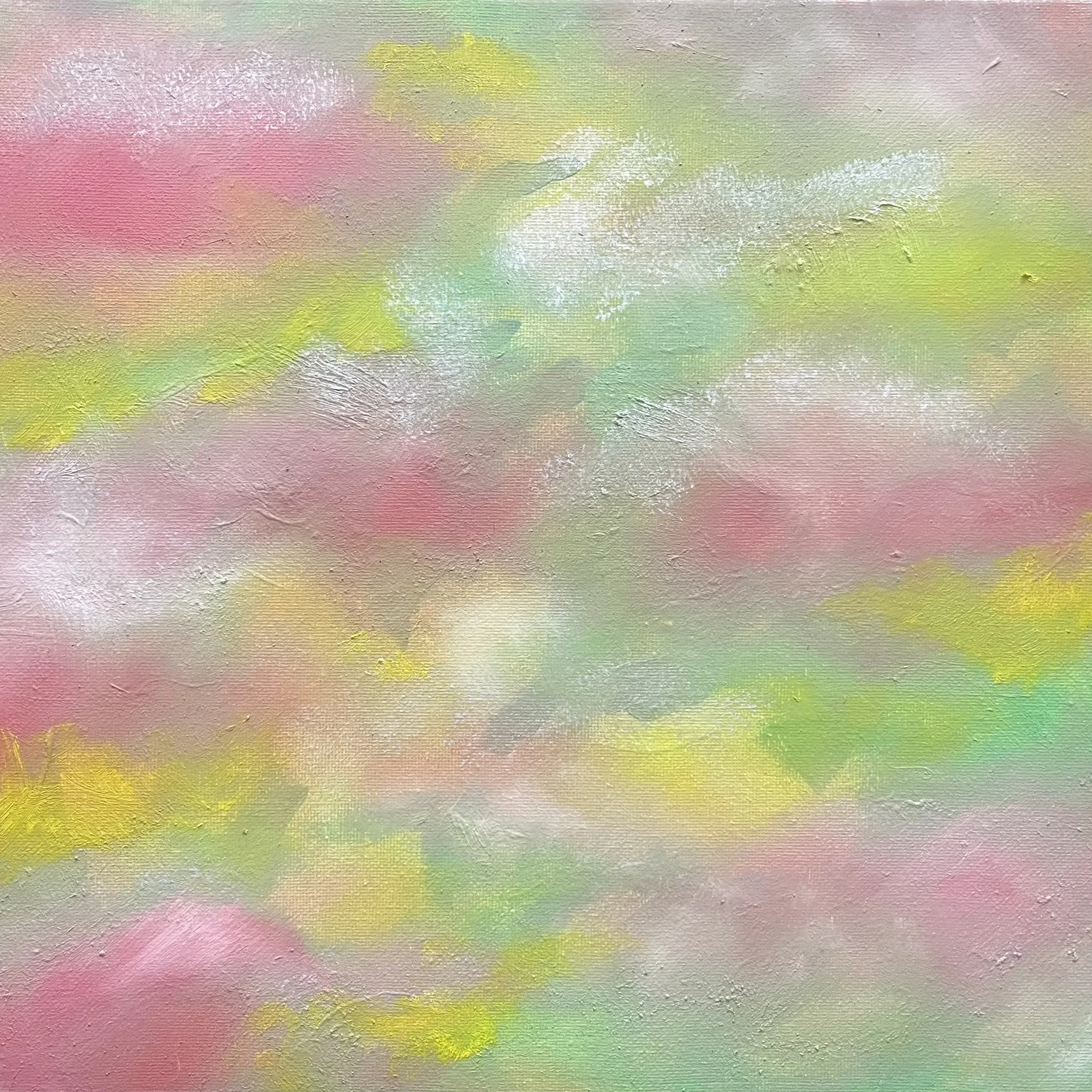
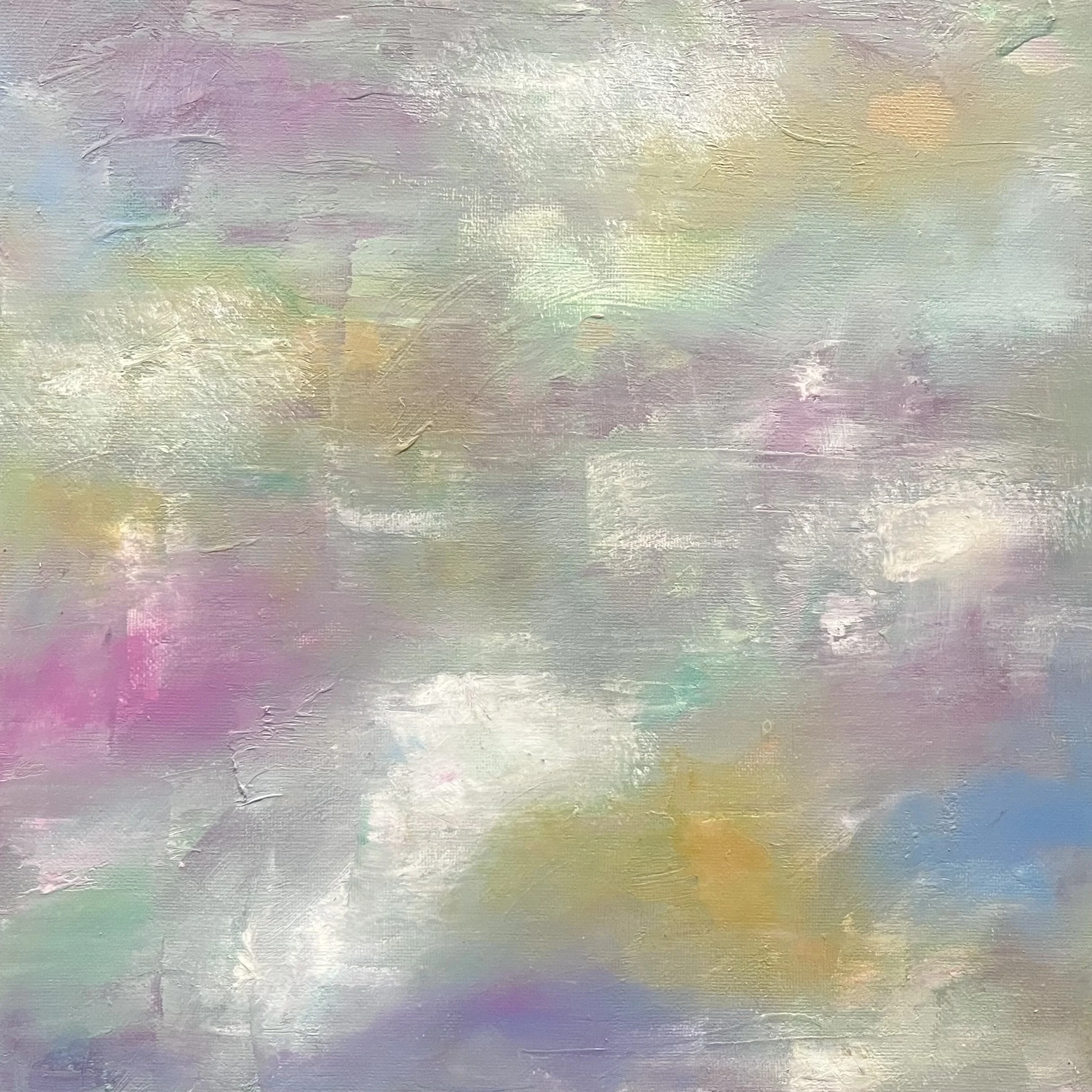
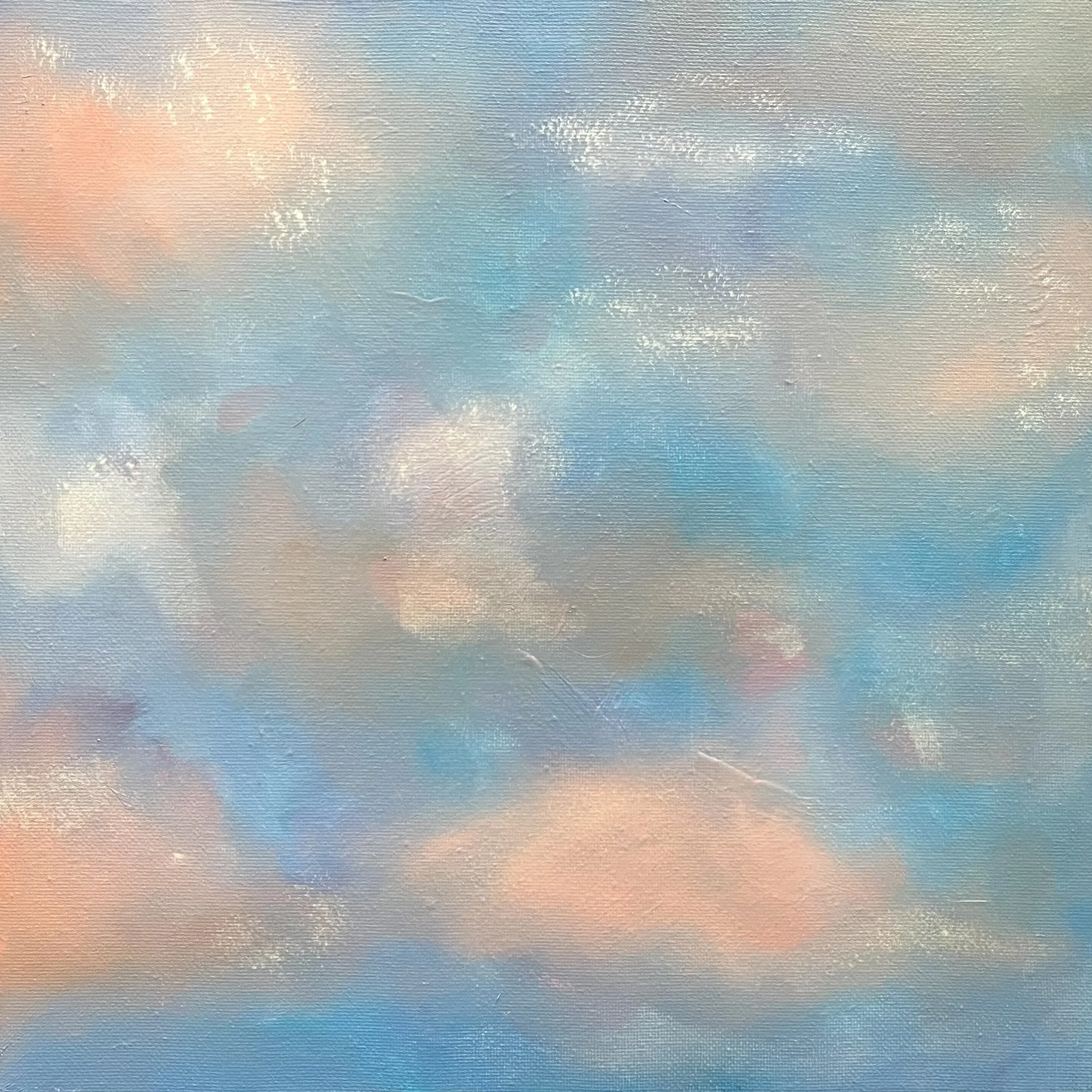
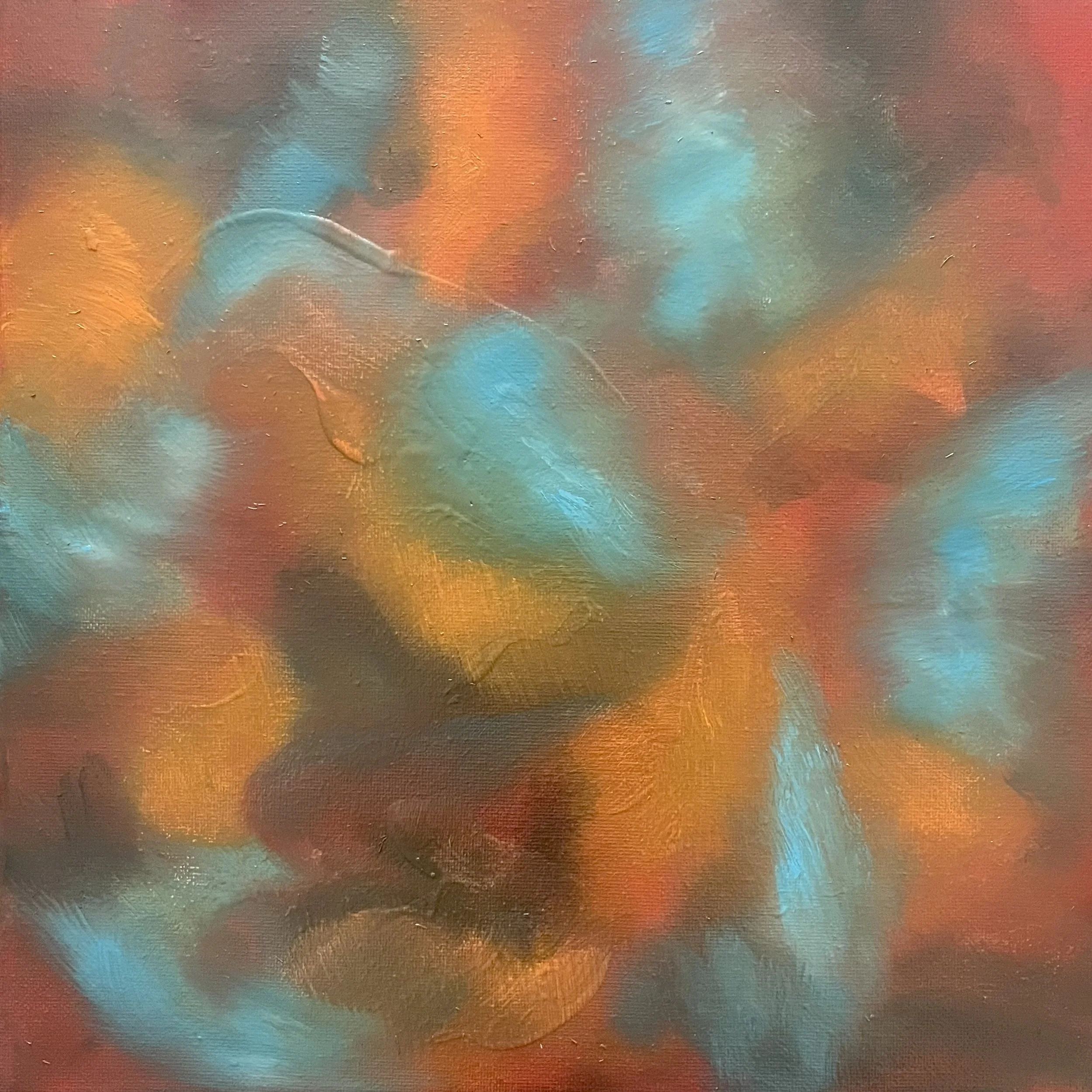
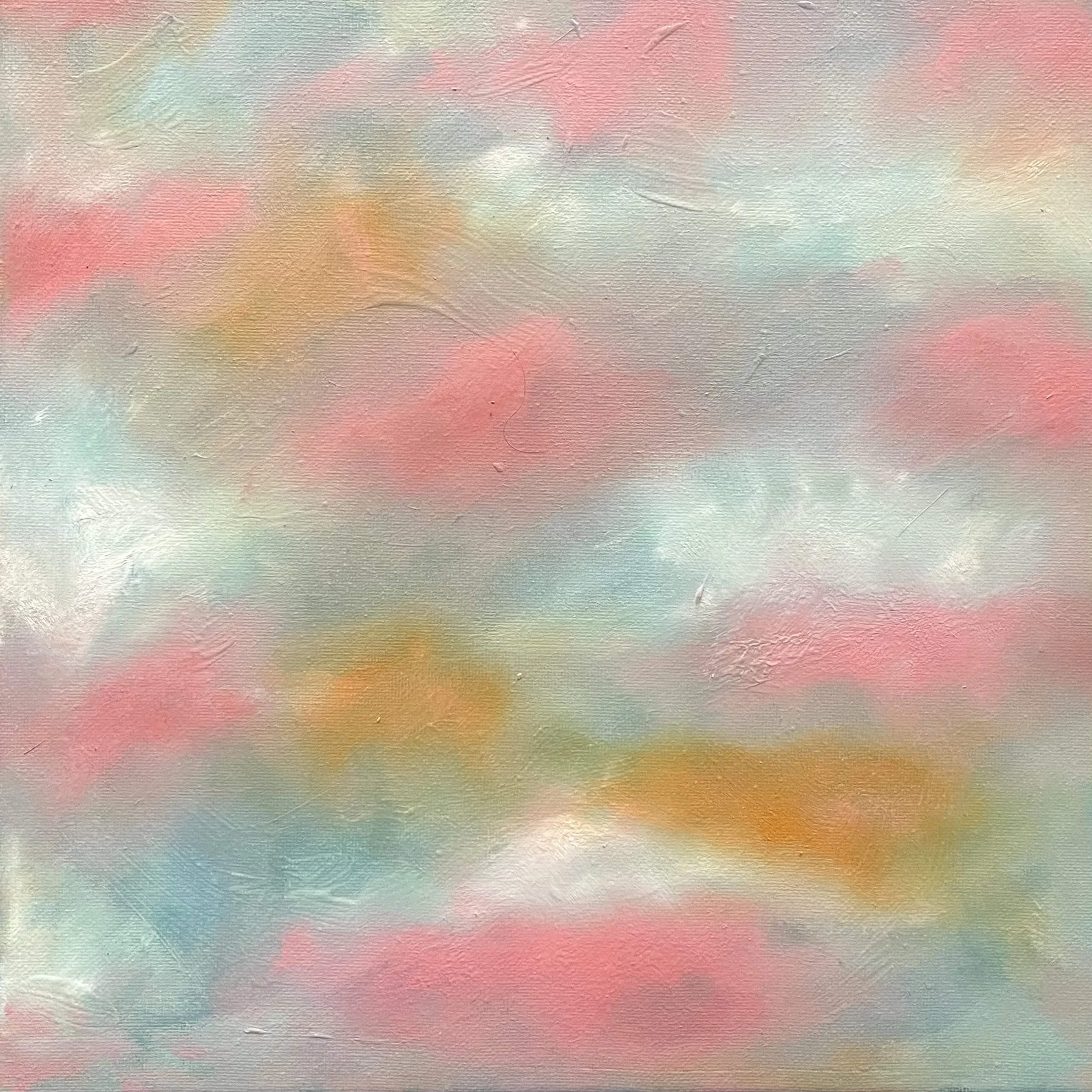
Below is a collection of oil paintings titled The Series of Five, painted by our founder, Alison Mackie. These paintings invite you to pause, reflect, and imagine. Like staring at clouds, see new shapes and connections, spark new ideas, and discover the missing piece on your founder’s journey.
-
![Abstract watercolor painting with pastel shades of pink, yellow, green, blue, and white blending together.]()
Creativity
Emergence, play, possibility
-
![Abstract pastel-colored painting with soft brushstrokes and textured surface.]()
Finances/Abundance
Resources, safety, worth
-
![Abstract watercolor painting with soft pastel colors including pink, orange, blue, and green.]()
Relationships/Partnerships
Connection, reflection, belonging
-
![Abstract pastel-colored sky with soft clouds and light textures.]()
Alignment
Balance between heart and mind
-
![]()
Motivation
Movement, direction, desire